
For a long time, low-profile mechanical keyboards have carried a heavy stigma: thin but hollow, light but cheap-feeling, and structurally mushy. Many enthusiasts have complained that linear low-profile switches feel no different from membrane keyboards, while tactile ones feel like pressing a rigid switch with zero rebound.
These complaints are not unfounded. To compress thickness, low-profile keyboards sacrifice key travel, reduce internal space, and often rely on plastic casings to control weight. This structural “thinness” directly leads to an “empty” typing experience.
However, the demand for low-profile keyboards is real. The ability to rest your wrists naturally flat on the desk provides an ergonomic, neutral wrist position—a massive bonus for office workers suffering from wrist fatigue.
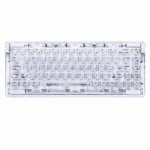
This is where the ATK YOGO 75 PRO Low-Profile Mechanical Keyboard steps in. Armed with a full CNC aluminum body and a 5-layer gasket mount design, it directly challenges the stereotypes of low-profile keyboards. But does it truly solve the pain points of feeling “hollow and cheap”? Where exactly is the ceiling for a low-profile typing experience? Let’s dive in.
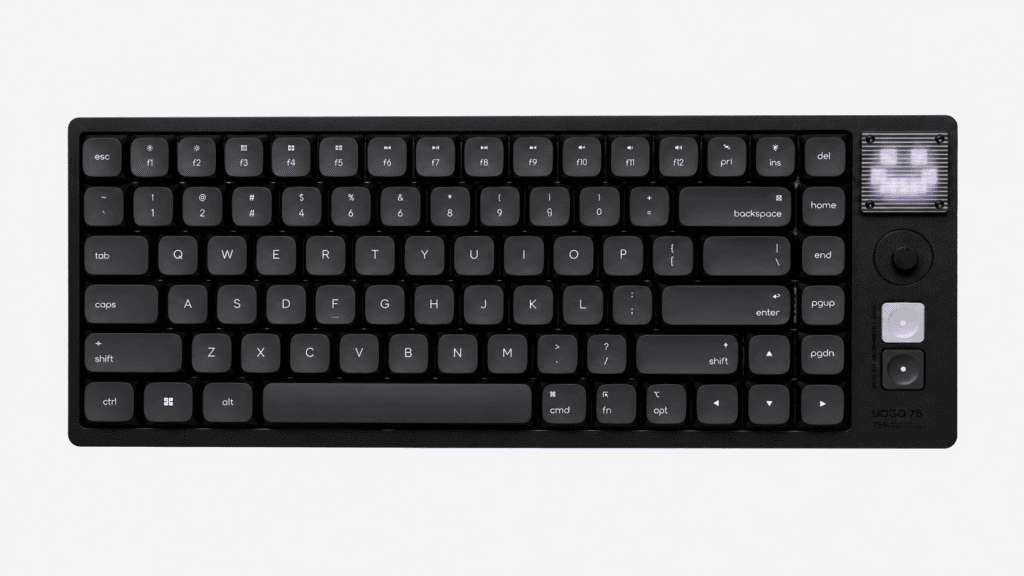
1. Chassis Rigidity: How Full CNC Aluminum Ends the “Thin = Cheap” Equation
Why Do Low-Profile Keyboards Often Feel Cheap?
Most low-profile keyboards on the market use plastic or semi-aluminum bodies (typically an aluminum top plate with a plastic bottom case). The lack of rigidity in plastic shells causes flex and rattling during fast typing. Furthermore, the resonant nature of plastic, combined with the short key travel, often makes the typing sound hollow and loose—like typing on a plastic lunchbox.
The YOGO 75 PRO’s Answer: Unibody CNC Aluminum
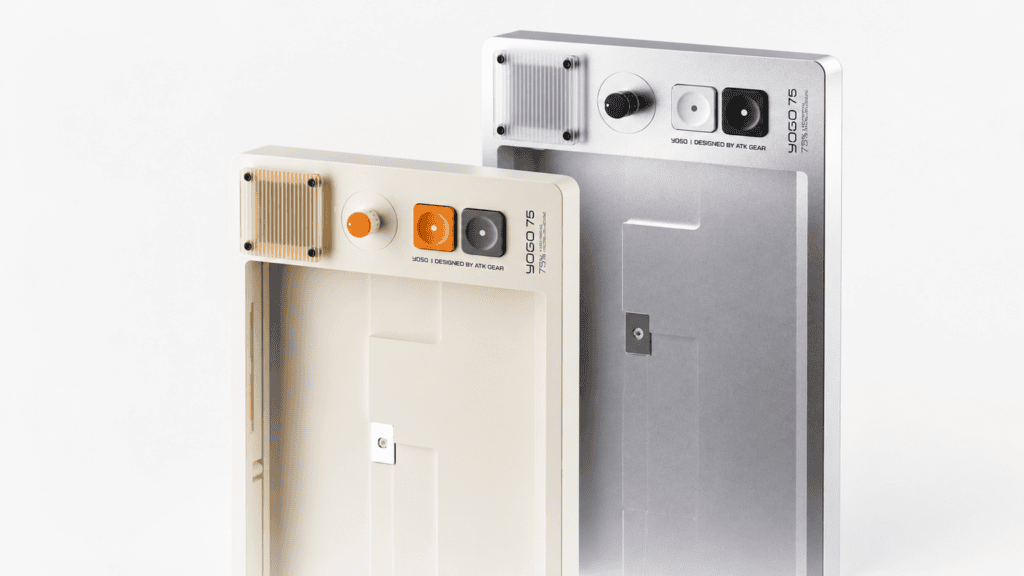
The chassis of the ATK YOGO 75 PRO is CNC-milled from a single block of aluminum, finished with zircon sandblasting and anodization. This isn’t just about aesthetics; the rigidity of a unibody CNC aluminum case far exceeds that of plastic or spliced aluminum shells.
In actual use, the physical rigidity is uncompromising. It doesn’t creak or flex during rapid typing. The high density of the aluminum body suppresses the resonance and deformation common in low-profile keyboards at the root. “Thin” no longer means “soft,” and “compact” no longer means “cheap.”
Note: This premium build comes with a trade-off—weight. The YOGO 75 PRO is designed as a premium desktop centerpiece rather than a lightweight travel companion.
2. Acoustic Performance: 5-Layer Gasket Mount Explained
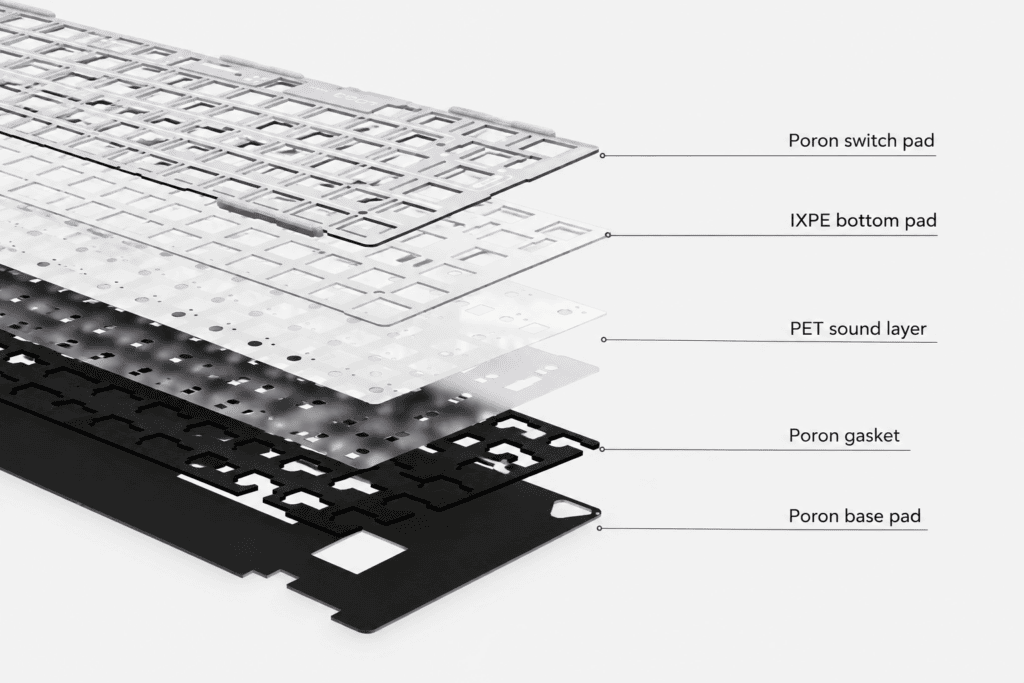
The 5-Layer Sound Dampening System
To combat the hollow sound typical of low-profile boards, the YOGO 75 PRO features a comprehensive acoustic control system:
- PORON Sandwich Cotton: Absorbs cavity noise between the plate and PCB.
- IXPE Switch Pad: Reduces switch bottom-out noise.
- PET Acoustic Pad: Acts as an isolation layer to block sound transmission.
- PORON Socket Foam: Absorbs vibrations in the hot-swappable socket area.
- PORON Case Foam: Eliminates bottom cavity resonance.
Combined with a full silicone Gasket mount structure and an FR4 immersion gold positioning plate (exclusive to the Pro version), it transforms the acoustic profile. Instead of a loose, hollow echo, the sound is deep, muted, and exceptionally clean.
3. The Typing Ceiling: Pushing Low-Profile to its Limits
Switch Options: Cloud vs. Pink Island Mini
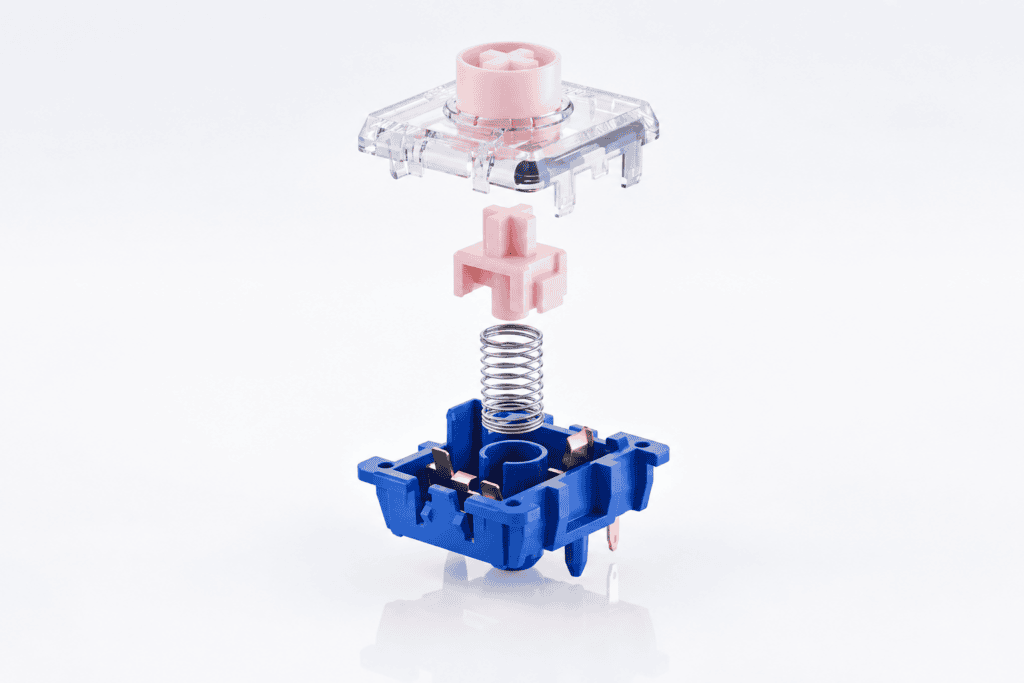
The YOGO 75 PRO offers two custom Kailh low-profile linear switches, both featuring a 2.8mm total travel:
- Cloud Switch (Linear): 40gf actuation force | 1.2mm actuation point. Made of 100% pure POM material, offering a traditional, smooth linear feel.
- Pink Island Mini (Silent Linear): 35gf actuation force | 1.3mm actuation point. Part of Kailh’s Deep Sea Silent Mini series, providing a soft, ultra-quiet touch.
The Pink Island Mini is a standout for office use, drastically reducing bottom-out noise. The Cloud switch, with its 40gf force, hits the sweet spot—light enough to prevent fatigue but heavy enough to avoid accidental presses.
The Caveat: Stabilizer Consistency
While the 1U keys sound and feel incredibly clean and responsive, the larger keys (stabilizers) reveal the inherent physical limitations of low-profile designs. The acoustic feedback on the spacebar or enter key may slightly differ from the smaller keys. While this is a common industry-wide challenge for low-profile boards, it is something to note for absolute perfectionists.
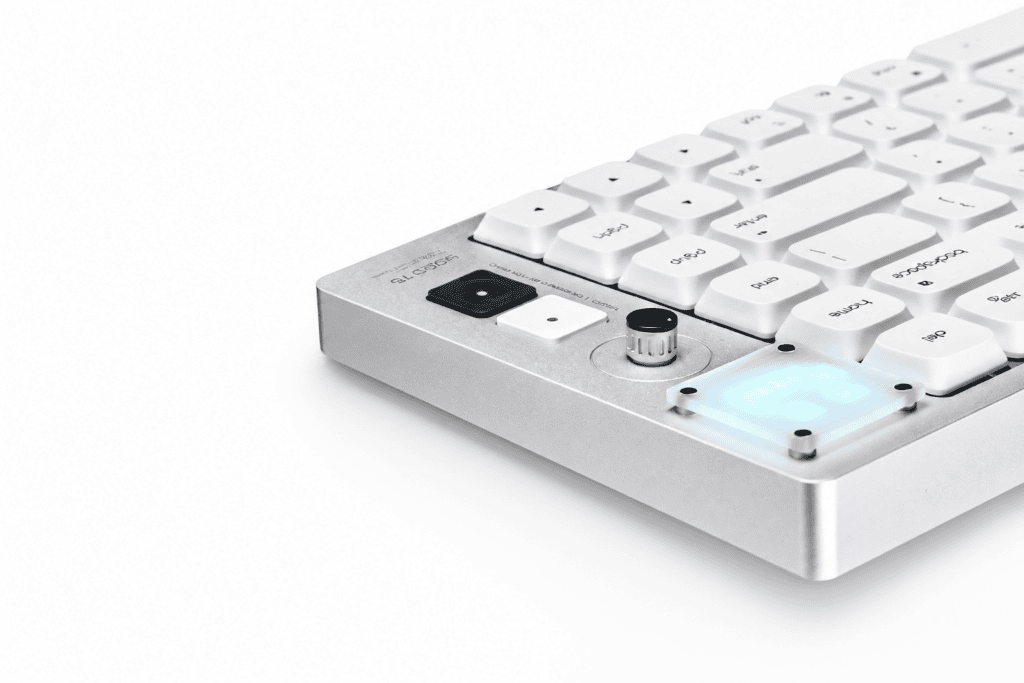
4. Pro Version Exclusives: Screen, Knob, and Magnetic Feet
What separates the Pro version from the standard edition?
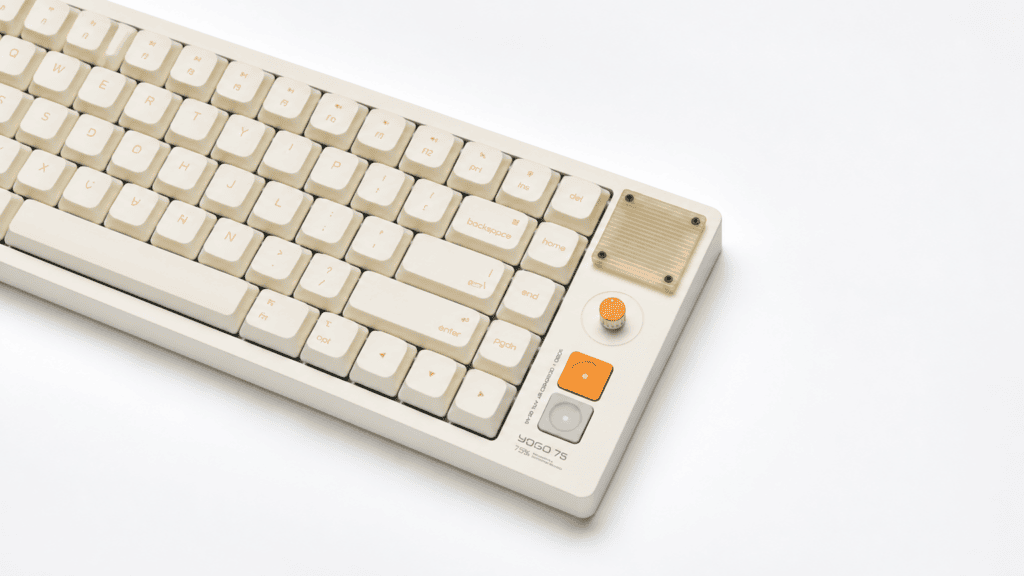
- 1.54-Inch Pixel Screen: Supports custom images and animations, maximizing desktop personalization.
- Aluminum Volume Knob: Features a textured side profile. Turn to adjust volume, press to mute—highly practical for daily use.
- Dedicated Media Keys: Two independent buttons (defaulted to ‘Show Desktop’ and ‘Lock PC’) with a tactile, gamepad-like click.
- Magnetic Feet: Swap typing angles instantly without snapping plastic tabs. Just detach and reattach magnetically.
Conclusion: A Texture Revolution, Though the Journey Continues
What did the ATK YOGO 75 PRO solve? It completely eradicated the “cheap and hollow” stereotype using a full CNC aluminum body and a 5-layer gasket structure. Within the physical constraints of low-profile keyboards, its build quality and texture have reached a new pinnacle.
Where is the ceiling for low-profile keyboards? The YOGO 75 PRO proves that the question isn’t about whether a low-profile keyboard can feel good, but rather about accepting its physical boundaries. If you are willing to trade the deep “thocky” acoustics of a thick, traditional mechanical keyboard for the ergonomic, wrist-saving comfort of a low-profile design, this is the ultimate choice.

 English
  German
  Portuguese
  Spanish
  Italian
  Finnish
  French
  Japanese
  Korean
  Swedish