
In 2026, Gasket mounts have become the default headline for nearly every magnetic switch keyboard on the market. From budget boards to flagships, “Gasket + multi-layer foam” has turned into a marketing checkbox—almost as if a Hall effect keyboard without a Gasket structure isn’t worth talking about.
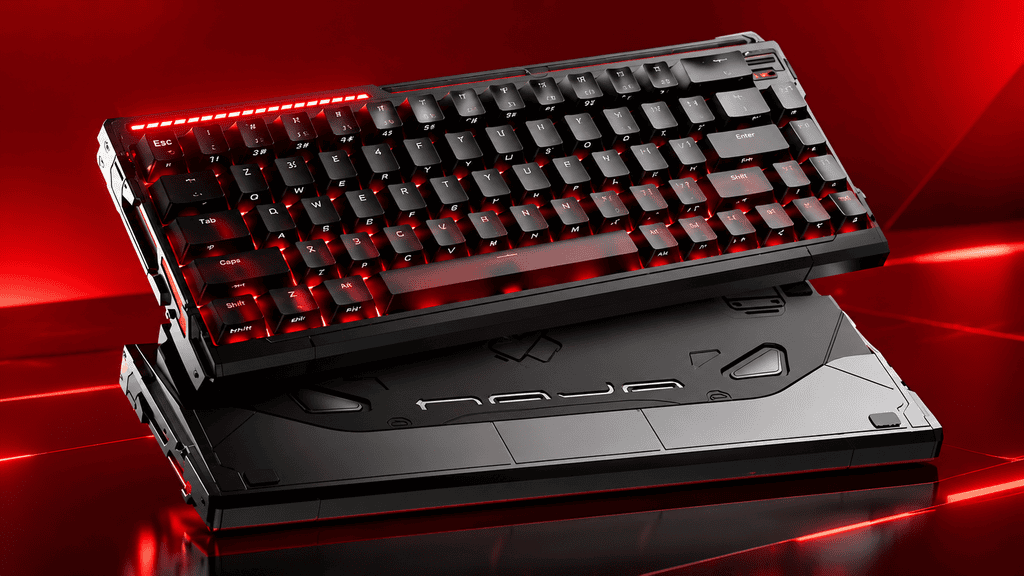
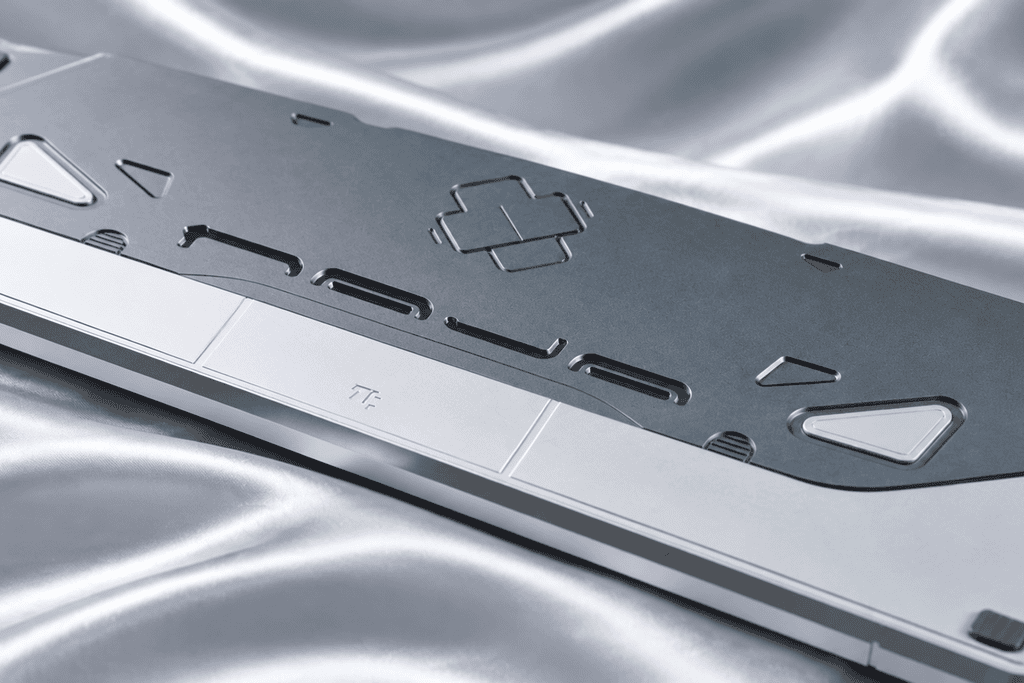
That’s exactly why the Ticktype NAJA68 Hall Effect Keyboard stands out. Instead of following the crowd, it went with a tray mount (“boat shell”) structure—a choice that looks counterintuitive on paper but makes complete sense once you understand how Hall effect switches actually work.
This article breaks down the engineering logic behind that decision across three layers: how magnetic switches operate, why tray mount wins on stability, and how Ticktype’s rib-limiting switch design locks everything into place.
The Hidden Enemy of Hall Effect Switches: Why Gasket Can Be a Burden
To understand the Ticktype NAJA68’s choice, we first need to look at what makes magnetic switches fundamentally different from mechanical ones.
Distance Is Everything
A Hall effect switch relies on a Hall sensor detecting the distance of a magnet to calculate key travel. The actuation point, Rapid Trigger (RT) precision, and dead zone all rest on one foundation: the precise distance between magnet and sensor.
The implication is critical—any deformation of the internal assembly can be misread by the sensor as key travel.
The “Soft Bounce” Problem
Gasket structures are engineered around one goal: a soft, cushioned typing feel with a warm, muted sound. That’s a mechanical-switch experience, and it works beautifully there.
But the Gasket’s internal plate floats on rubber pads. Under firm presses, it flexes. As one community discussion put it plainly: “Magnetic switches really need stability—Gasket structures deform, which causes unstable magnetic triggering.”
Other analyses reach the same conclusion: Hall effect boards “rely more on hard Gaskets, aluminum plates, or tray mounts to prevent internal deformation from causing flux misreads and chatter.”
The core conflict: Gasket is built for comfort, while Hall effect is built for precision. When comfort compromises precision, priorities have to be reconsidered.
Not a Rejection—A Fit for the Use Case
This isn’t saying Gasket magnetic keyboards can’t work. Many products strike a fine balance. But the Ticktype NAJA68’s logic is simple: in competitive scenarios, stability outranks softness. As a veteran custom keyboard team, Ticktype understands this trade-off more deeply than most brands.
The Stability Dividend of Tray Mount: Hall Effect Needs “No Movement”
Now let’s look at why tray mount—often dismissed in the mechanical world—becomes an asset for magnetic switches.
Rigid Connection by Design
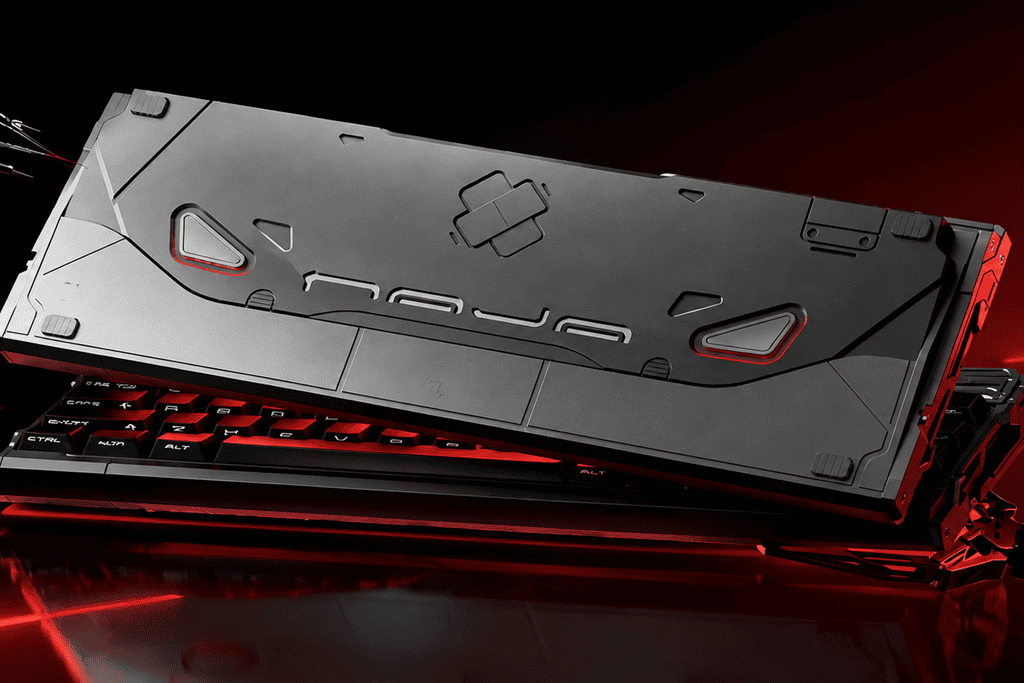
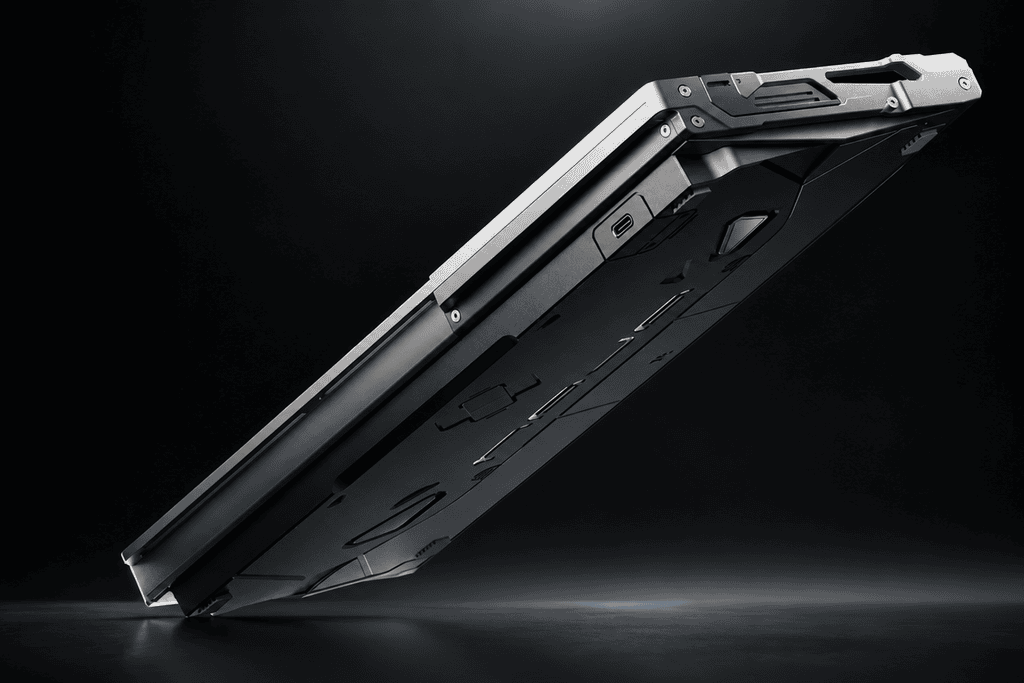
The defining trait of a tray mount is that the PCB is screwed directly into the case. This rigid connection means the internal assembly won’t flex or shift under pressure—so the magnet-to-sensor distance stays constant. That’s precisely what Hall effect switches demand.
A Double Payoff on Stability
| Benefit Layer | What It Delivers | Ticktype NAJA68 Result |
|---|---|---|
| Trigger consistency | Distance readings stay uniform across actuation points | T1–T4 deviation within ~0.005mm |
| RT reliability | No ghost triggers or missed reads during rapid taps and quick stops | Stable high-frequency performance |
Reviewers have described the Ticktype NAJA68 as feeling “like typing on a precision instrument”—a direct expression of tray mount rigidity.
Covering the Weak Spot
Tray mount’s traditional downside is resonance and hollow, cavity-like sound, since vibration transfers straight into the case. The Ticktype NAJA68 answers this with refined internal foam tuning. While the full damping recipe isn’t published, reviews confirm its feel and stability “are no less impressive than other structures.”
The formula: tray mount rigidity + thorough foam = firm but never hollow.
Ticktype Magnetic Switch Gen 1: How Rib Limiting Locks Down Wobble
Tray mount solves stability at the case level. But the Ticktype NAJA68 goes further—into the switch itself.
The Root of Switch Wobble
The gap between a magnetic switch’s stem and housing creates lateral wobble. Wobble doesn’t break triggering (as long as magnet and sensor stay aligned), but excessive play ruins the sense of responsiveness—the “eye-to-mind-to-hand” immediacy that competitive players crave.
Rib Limiting to the Rescue
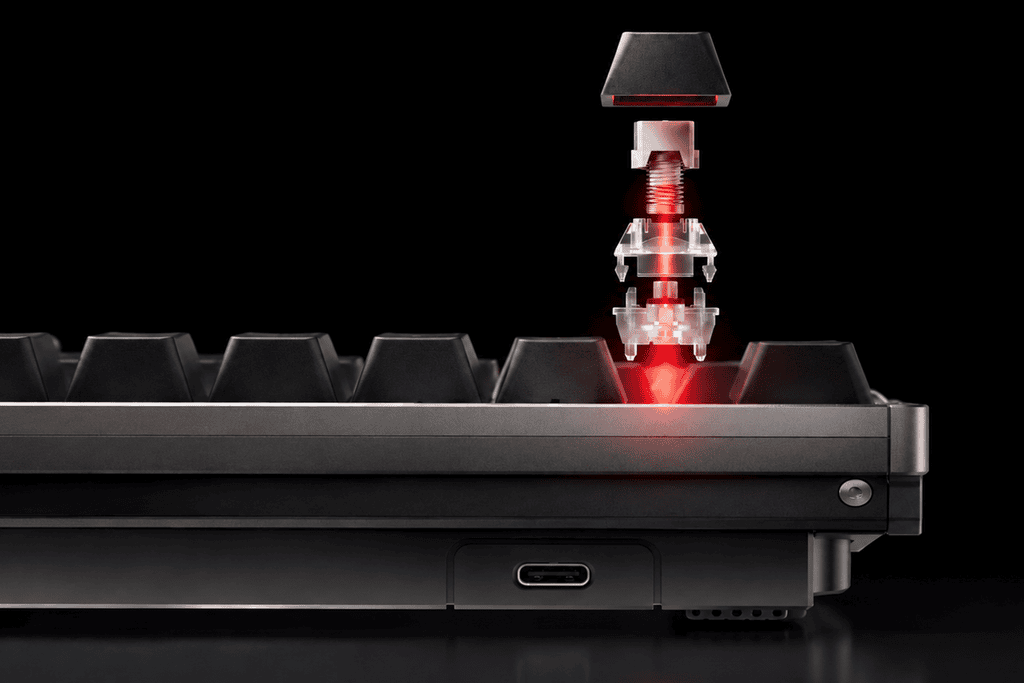
The Ticktype Gen 1 magnetic switch uses multiple internal rib-limiting structures:
- Top housing: 12 ribs
- Bottom housing: 8 ribs
- Paired with a large dust-wall stem
Official figures claim a 50% improvement in wobble control versus standard magnetic switches, delivering stability across the entire travel—from initial actuation to bottom-out. One user summed it up: “Barely any wobble—rock solid.”
The Double-Stability Effect
- Tray mount → stability at the assembly level (PCB won’t deform)
- Rib limiting → stability at the switch level (stem won’t wobble)
Stacked together, the Ticktype NAJA68’s stability isn’t a single-dimension advantage—it’s a systemic precision guarantee.
Sound Performance: Making Tray Mount Sound Un-Tray-Mount
Let’s address the elephant in the room—the reputation tray mount has for poor acoustics.
The “Original Sin” of Tray Mount
Because of rigid connection, tray mount transfers strike vibration directly to the bottom case, producing resonance and cavity noise. Some reviewers joke that an empty tray mount “shakes the whole desk with one press.” This is exactly where the Ticktype NAJA68 had to prove itself.
What the Ticktype NAJA68 Actually Sounds Like
Reviews describe it as “muted-crisp, with good consistency and no obvious noise on larger keys.” That “muted-crisp” phrasing is telling—it blends the crispness of tray mount with the warmth introduced by careful foam tuning. Users note “a crisp, responsive sound that doesn’t feel bouncy, with excellent large-key consistency and a genuinely solid build feel.”
Consistency Is the Real “Good Sound”
For a competitive keyboard, consistency matters more than beauty. If every key sounds different, it signals uneven resonance across the assembly. The Ticktype NAJA68’s uniform acoustics prove the tray mount’s resonance is not just controlled—it’s controlled evenly.
RT Precision Meets Tray Mount: Let the Data Speak
Numbers settle the debate on whether tray mount hurts precision.
| Test Metric | Measured Result |
|---|---|
| Full-chain press latency | 0.314 ms |
| Full-chain release latency | 0.196 ms |
| Lowest RT trigger precision | 0.005 mm |
| Switch consistency deviation (T1–T4) | ~0.005 mm |
What the Numbers Mean
- 0.314 ms press latency sits in the industry’s top tier, matching Gasket flagships.
- 0.005 mm consistency deviation is the headline stat—proof that rigid tray mounting introduces zero precision loss.
- If tray mount were truly “unstable,” T1–T4 deviation could never land inside 0.005mm.
The takeaway: tray mount didn’t drag RT precision down. By eliminating internal deformation as a variable, it made precision control purer.
Not “Counter-Trend,” but “Back to Basics”
The Ticktype NAJA68 chose tray mount not because it couldn’t build a Gasket board, but because it thought clearly about what Hall effect switches truly need.
Mechanical switches treat “soft bounce” as a bonus. For magnetic switches, stability is the foundation—and without a solid foundation, every spec is a castle in the air. Tray mount supplies rigidity, rib limiting stabilizes the switch, and foam tuning refines the sound. Together they form the Ticktype NAJA68’s “stability triangle.”
As one reviewer put it: “Coming from a veteran custom keyboard team, the Ticktype NAJA68 keeps flagship-level performance while returning focus to design language, feel, and sound quality.”
While other magnetic keyboards race to stack specs, the Ticktype NAJA68 chose to reinforce the fundamentals—because the fundamentals are exactly what make specs perceptible in the first place.
Tray mount isn’t a compromise. It’s a choice. And the Ticktype NAJA68 proves that choice was right.

 English
  German
  Portuguese
  Spanish
  Italian
  Finnish
  French
  Japanese
  Korean
  Swedish