
Ask any veteran keyboard enthusiast about low-profile boards, and you’ll likely hear the same complaint: they sound hollow and feel harsh, like typing on a steel plate.
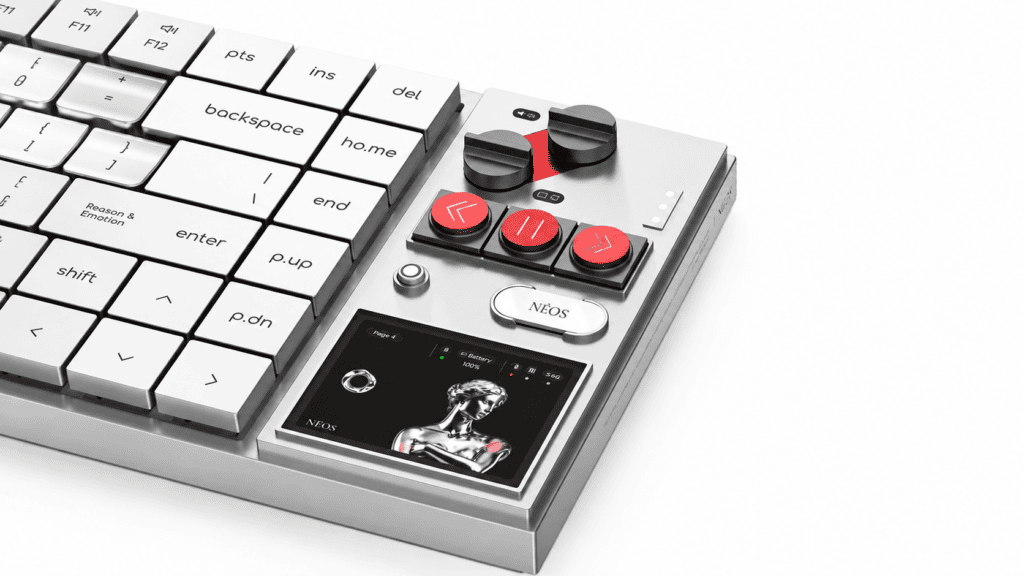
The AULA Neos75 sets out to challenge that reputation. By borrowing acoustic tricks from full-height custom keyboards, it aims to deliver a deep, tight, “thocky” sound in a slim form factor.
In this article, we break down the Neos75’s sound profile through three lenses: internal structure, switches, and case materials. We’ll also ask a bigger question: does a low-profile keyboard need a heavy, bassy sound at all?
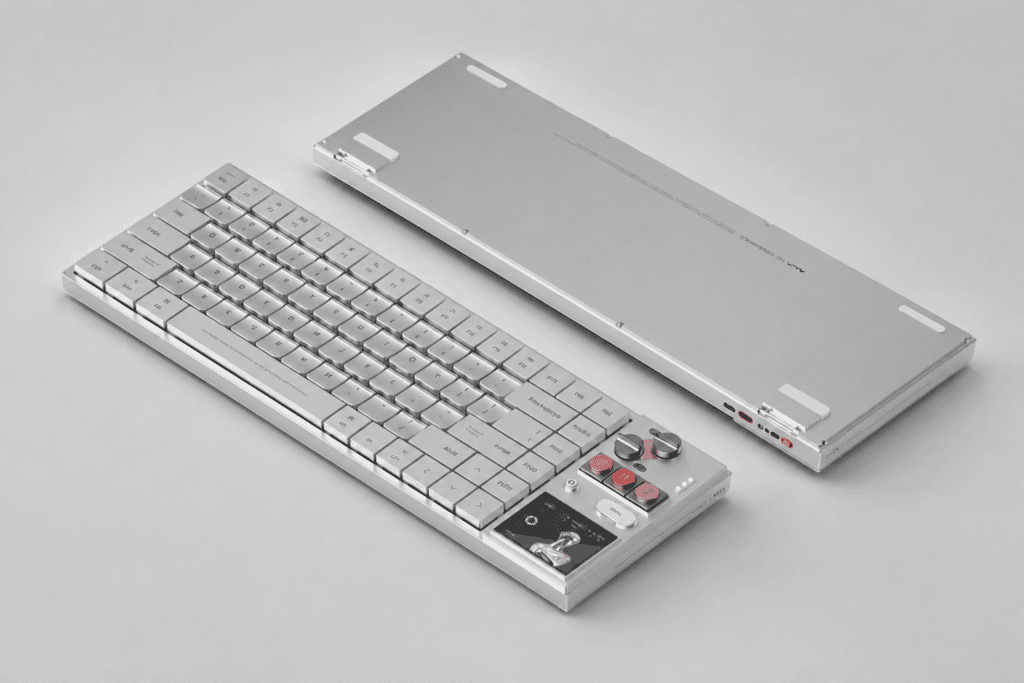
The Acoustic Problem With Low-Profile Keyboards
Low-profile keyboards face a built-in disadvantage. To stay slim, they shorten the switch travel and shrink the internal cavity. That leaves very little room for sound-dampening materials.
Why Do Low-Profile Keyboards Sound Hollow?
- Minimal internal space: A thin plate and a shallow case leave almost no room for foam.
- No bottom dampening: Many slim boards ship with little or no sound treatment underneath.
- Plastic echo: Each keystroke bounces around inside a thin plastic shell, creating a crisp but empty, rattly sound.
The result is the “acoustic original sin” of low-profile keyboards: a sound that’s sharp, thin, and hollow.

The Structural Fix: Gasket Mount Meets Low-Profile Design
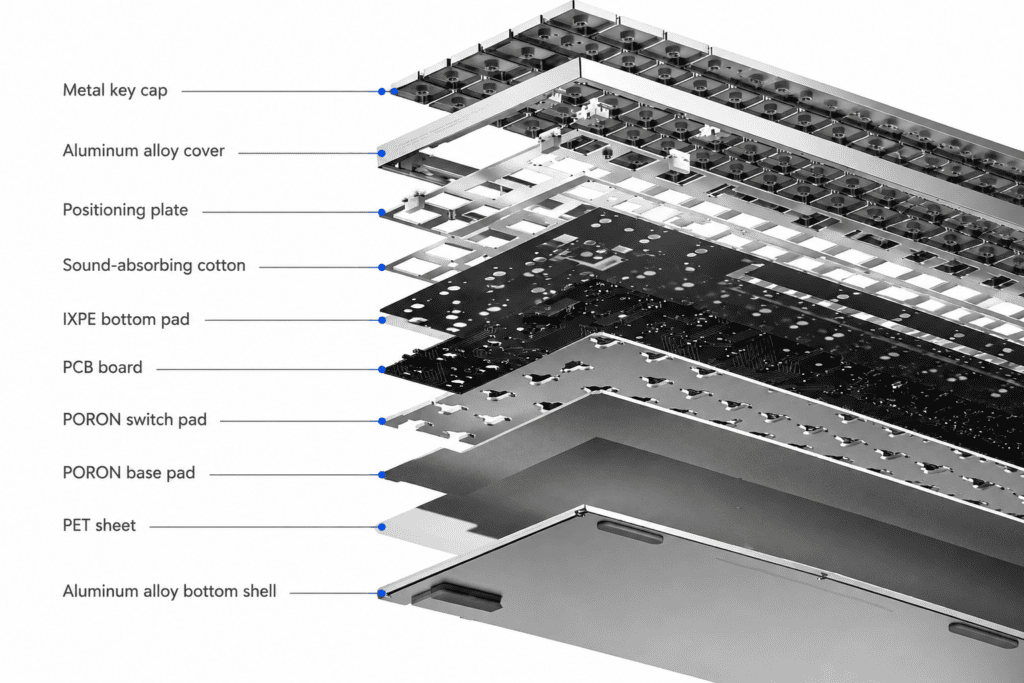
The Neos75 takes a bold approach. Instead of accepting the limits of a slim chassis, it applies the gasket-mount and multi-layer foam formula common in premium full-height keyboards.
Silicone Gasket Mount: Floating the Typing Assembly
A gasket mount suspends the internal assembly on soft silicone pieces instead of bolting it directly to a rigid case. The benefits are clear:
- Vibration absorption: Keystroke energy is absorbed by the silicone rather than passed straight into the bottom case.
- Less resonance: Fewer hard contact points means fewer harsh, ringing overtones.
- Softer feel: The flex adds a slightly cushioned bounce to each keypress.
Layered Sound Dampening in a Tight Space
Even with limited height, the Neos75 packs in multiple acoustic layers, including sandwich foam, under-switch padding, and bottom foam. Together they work like a soundproof booth, trapping the bottom-out noise inside the board instead of letting it echo.
The result: the hollow “plastic clack” turns into a compact, short, muted thock. If you want to see the full specs for yourself, you can check out the AULA Neos75 Mac edition here.
The Core Engine: Kailh Custom “Tea Charm” Switches
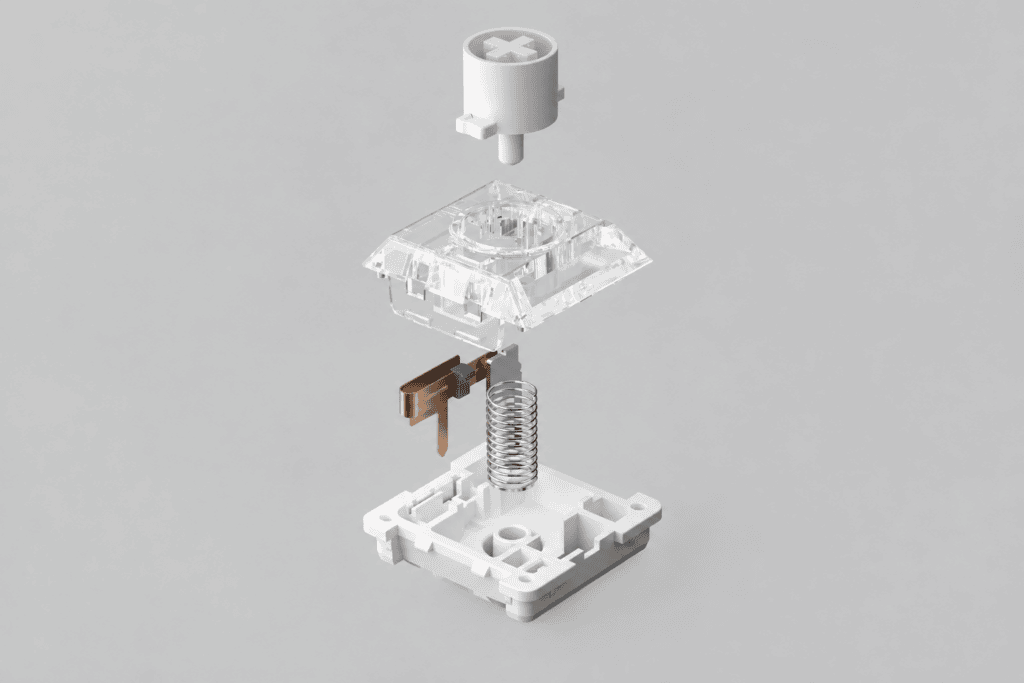
Structure shapes the sound, but switches define its character. The Neos75 uses Kailh custom low-profile switches (known in the community as the “Tea Charm” series), and they change both feel and sound.
Early, Pronounced Tactile Bump
These switches deliver a tactile bump early in the keystroke. The initial resistance is light, then you cross a clear threshold and feel strong, lasting feedback.
This fixes another common low-profile complaint: the vague, “press and hit the bottom” feeling. Typing gains rhythm and weight.
Stem-Post Bottom-Out: A Different Kind of Impact
Many traditional switches bottom out on the base of the stem, which scatters the sound. The Kailh custom switch bottoms out on a central stem post instead.
That changes the contact area and material of the impact. Each bottom-out produces a short, focused, solid “dup” instead of a diffuse clack.
Two Sound Layers in One Keystroke
- Tactile bump: a subtle click-like accent.
- Bottom-out: a deep, tight thock, reinforced by the foam and gasket structure.
Together, they create a sound with contour and texture, not a flat, one-note clatter.
The Amplifier: Aluminum Body and Metal Keycaps
Materials are the final piece of the acoustic puzzle.
CNC Aluminum Case: A Rigid, Resonance-Free Shell
Plastic bottom cases tend to buzz and resonate. The Neos75’s CNC aluminum body is dense and rigid, which helps:
- Reduce muddy, hollow resonance.
- Keep the sound cleaner and more focused.
- Add a premium feel and stable weight on the desk.
Metal Keycaps: Added Mass, Added Definition
Metal keycaps add significant weight to every key. A heavier keycap hits the switch with more inertia, producing a crisper, more decisive bottom-out. Combined with the stem-post design, the final sound becomes dense, firm, and deep.
The Final Sound Profile
| Element | Contribution to Sound |
|---|---|
| Silicone gasket mount | Absorbs vibration, reduces resonance |
| Layered foam | Traps noise, shortens decay |
| Kailh custom switch | Early tactile bump, focused bottom-out |
| CNC aluminum case | Cleaner, purer tone |
| Metal keycaps | Heavier, more defined impact |
Each element reinforces the others. The community often describes the overall result as a “muffled, full-bodied” sound: no piercing highs, no hollow echo, just a deep thock like tapping on solid wood.
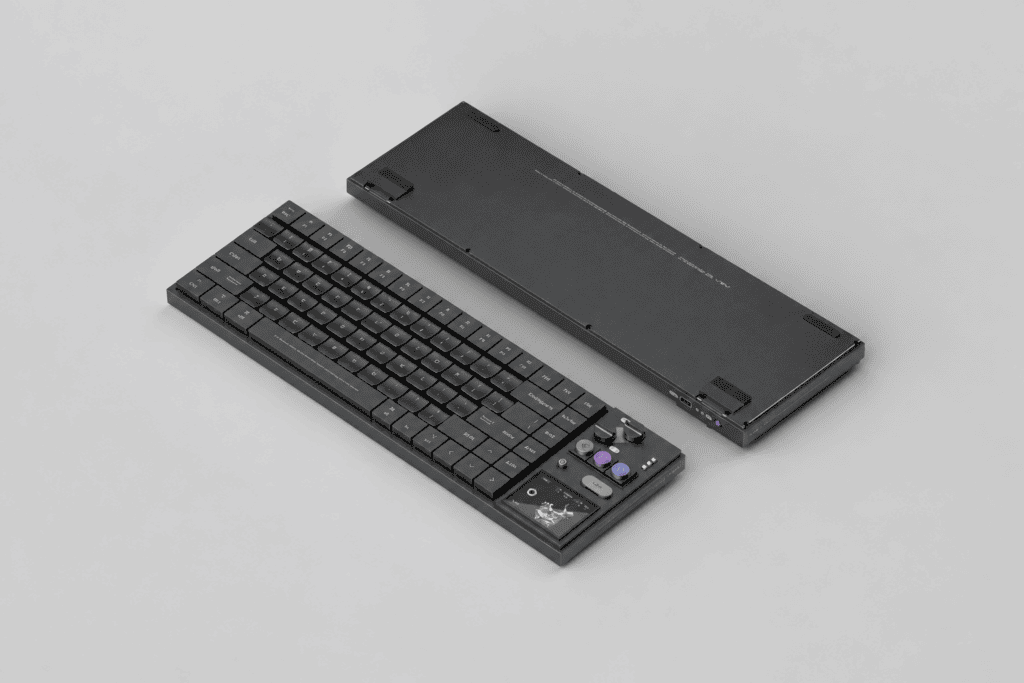
Is This Sound What Low-Profile Users Actually Want?
This is the real debate. Is a heavy acoustic profile a genuine need, or just a manufacturer’s experiment?
The Traditional Low-Profile Audience
Most buyers choose slim keyboards for quiet, light, low-key typing in offices, libraries, or shared spaces.
The Neos75’s Different Approach
The Neos75 chases a weightier, more expressive sound that isn’t exactly quiet. It’s closer to the “marble” or “thocky” sound that full-height enthusiasts love, brought into a slim form factor.
A New Category, Not a Compromise
Traditional low-profile users may not need this much depth. But the Neos75 appeals to a different group: typists who want the ergonomic comfort of a low profile without giving up the sound and feel of a custom keyboard.
It shows that low-profile boards don’t have to be thin-sounding “typewriters.” They can compete acoustically with taller builds. If that blend sounds like your ideal setup, take a closer look at the AULA Neos75.
Final Verdict: A Non-Traditional Answer to Low-Profile HiFi
The Neos75 doesn’t follow the usual “slim and quiet” playbook. With a gasket mount, stem-post bottom-out switches, and an aluminum-and-metal build, it carves out a new path for low-profile acoustics.
Its sound is deep, short, and tactile, with none of the looseness or hollowness that low-profile boards are known for. If a thin, tinny sound has always been your dealbreaker, the Neos75 is worth serious consideration.
 English
 German
 Portuguese
 Spanish
 Italian
 Finnish
 French
 Japanese
 Korean
 Swedish