
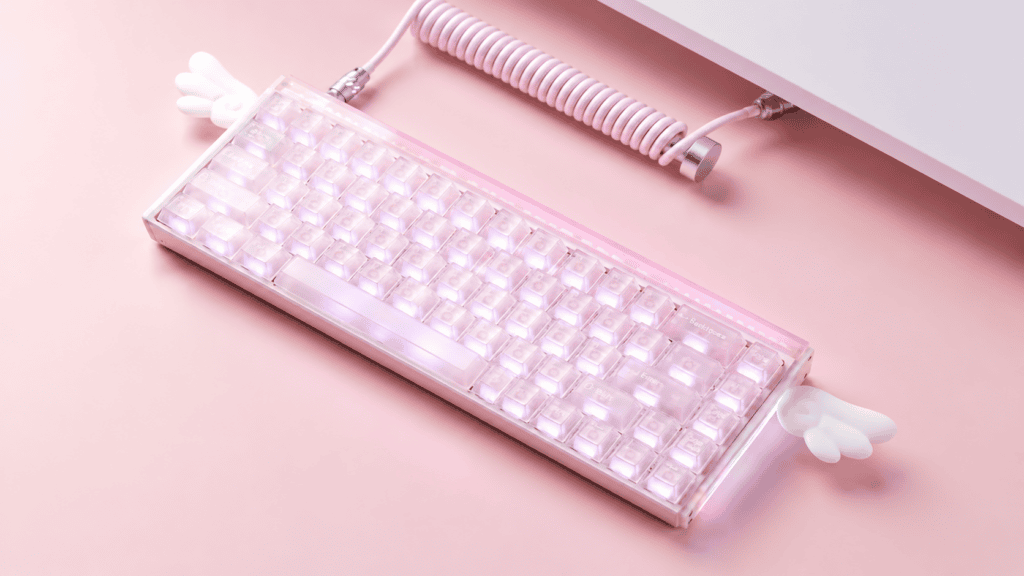
When MelGeek calls the MADE68 PRO+ “The Champion’s Secret Weapon,” it isn’t just marketing bravado. VALORANT professionals like Zekken (Sentinels) and Cortezia rely on the MADE series to dominate high-stakes tournaments — and their keyboard choice is never accidental. It’s the result of relentless testing under pressure.
So the real question is this: Is the MADE68 PRO+ genuinely “pro-grade,” or did the pros just happen to use it? Let’s break it down across performance, software, feel, and build quality — and find out whether it earns its title.
Why Pros Choose It: Core Performance First
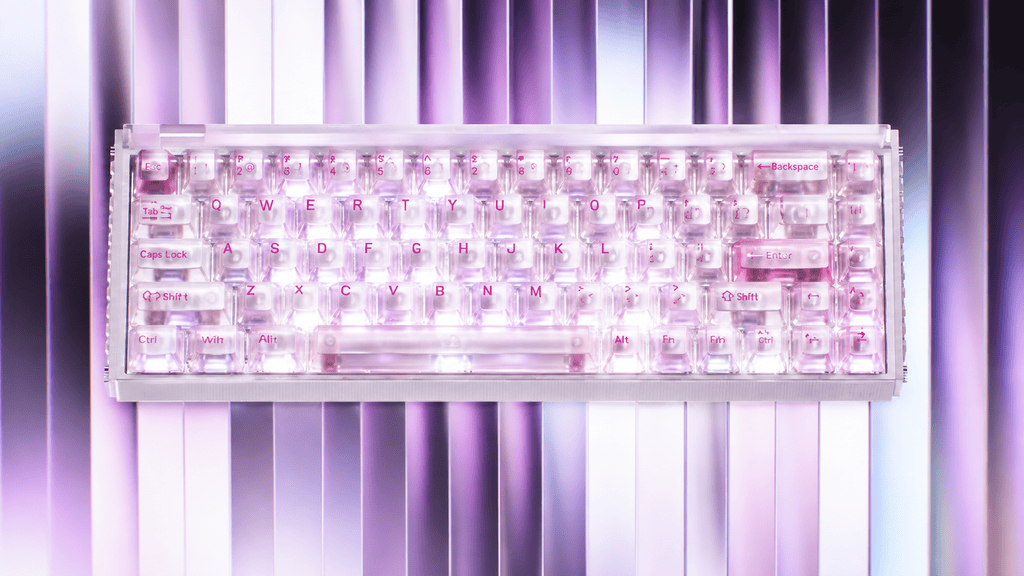
Elite FPS play lives and dies by milliseconds. Before touching the “feel” of a keyboard, professionals scrutinize the numbers — and the MelGeek MADE68 PRO+ Hall Effect gaming keyboard delivers a spec sheet built for competition.
Hardware Specifications at a Glance
| Spec | Rating |
|---|---|
| Polling Rate | 8000Hz |
| Scan Rate | 16000Hz |
| Theoretical Latency | 0.125ms |
| Avg. Release Latency | 0.42ms (robot-tested) |
| Rapid Trigger Precision | 0.01mm |
| Actuation Range | 0.1–3.3mm (some sources cite 0.1–4.0mm) |
| Switches | TTC King of Magnetism Purple Heart |
| Connection | Wired USB-C |
What 0.125ms Latency Actually Means in Competition
MelGeek validated a 0.42ms average release latency through professional robotic simulation testing. In VALORANT, the counter-strafe is one of the most frequent and decisive mechanics you’ll perform.
Pro-level counter-strafe windows sit between 50–100ms, and a keyboard’s release latency directly determines how clean that stop is. At 0.42ms, the instant you lift off the “A” key, the keyboard fires the “stop” signal almost simultaneously — buying you precious milliseconds for a crisp, accurate shot.
The Real Feel of 0.01mm Rapid Trigger Precision
That 0.01mm adjustability translates to a near-zero dead zone. For tap-strafing and micro-adjustments, the ultra-short actuation ensures every light press registers — no more “I pressed it but nothing fired” frustration.
Independent comparisons even note that the MADE68 series approaches Wooting-level magnetic switch precision — high praise in the Hall effect world.
HIVE Software: The Real Gateway to “Pro-Level” Play
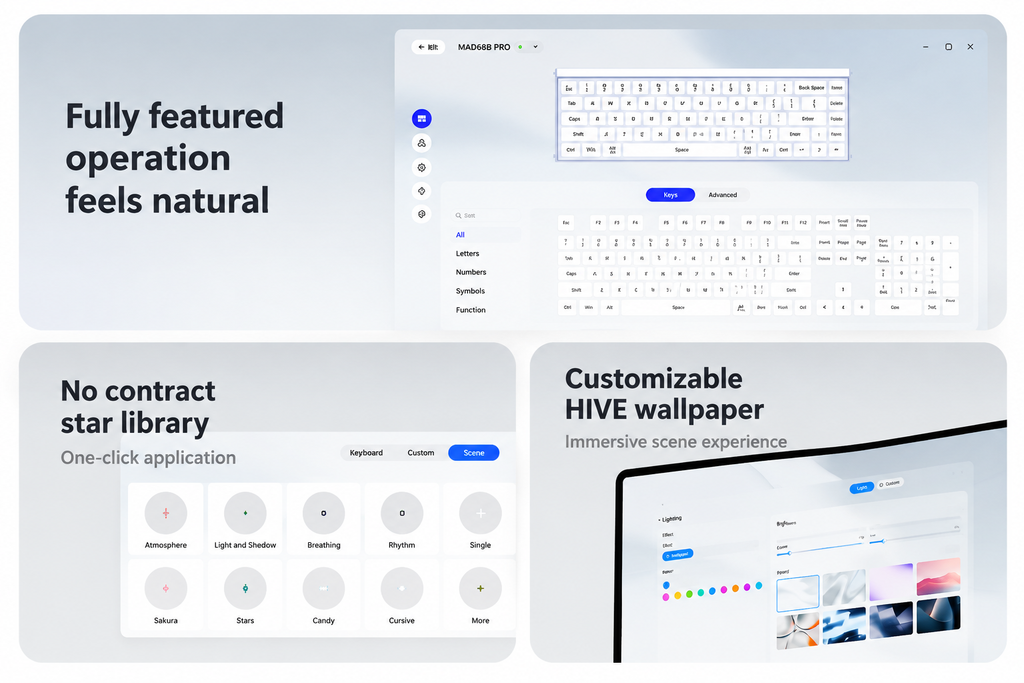
Great hardware is only half the story. What separates a competitive keyboard from a merely fast one is the software — and MelGeek’s HIVE driver is where the MADE68 PRO+ pulls ahead.
Zero-Install, Browser-Based Tuning
HIVE runs directly in your web browser — no client installation required. For pros who constantly switch between training rigs, or players who game on multiple machines, this is a genuine quality-of-life win. Open a browser, tune your parameters, and you’re set.
HIVE covers everything you’d expect: Rapid Trigger sensitivity, actuation depth, macro programming, RGB customization, and OTA firmware updates.
The Pro-Grade Feature Matrix
Through HIVE, the MADE68 PRO+ unlocks a full suite of competitive tools:
- SOCD (Simultaneous Opposite Cardinal Direction) — Manages opposing inputs (left/right, up/down). Essential for clean counter-strafes in FPS and precise combo inputs in fighting games.
- DKS (Dynamic Keystroke) — One key triggers multiple actions. Think “switch to flashbang → throw” in a single press.
- END (Reverse Stop) — Releasing the first key instantly triggers the second, enabling lightning-fast A/D counter-strafing in CS2.
- RS (Rappy Snappy) — When two keys are pressed together, only the deeper press registers.
Why This Ecosystem Matters
To be fair, these features aren’t exclusive to MelGeek — Wooting and others offer similar solutions. But HIVE’s edge is instant browser access + frequent updates. One user summed it up perfectly: “MelGeek’s software is a real plus — they update it constantly.”
The takeaway: If you don’t play FPS, SOCD and END won’t matter much. But if you grind VALORANT or CS2, HIVE puts the pros’ entire operational logic directly in your hands.
Feel & Sound: A “Hi-Fi” Answer with Five-Layer Foam + FR4 Plate
Beyond raw speed, the MADE68 PRO+ was engineered to feel premium — and MelGeek clearly aimed for a boutique, custom-keyboard experience.
Acoustic Structure
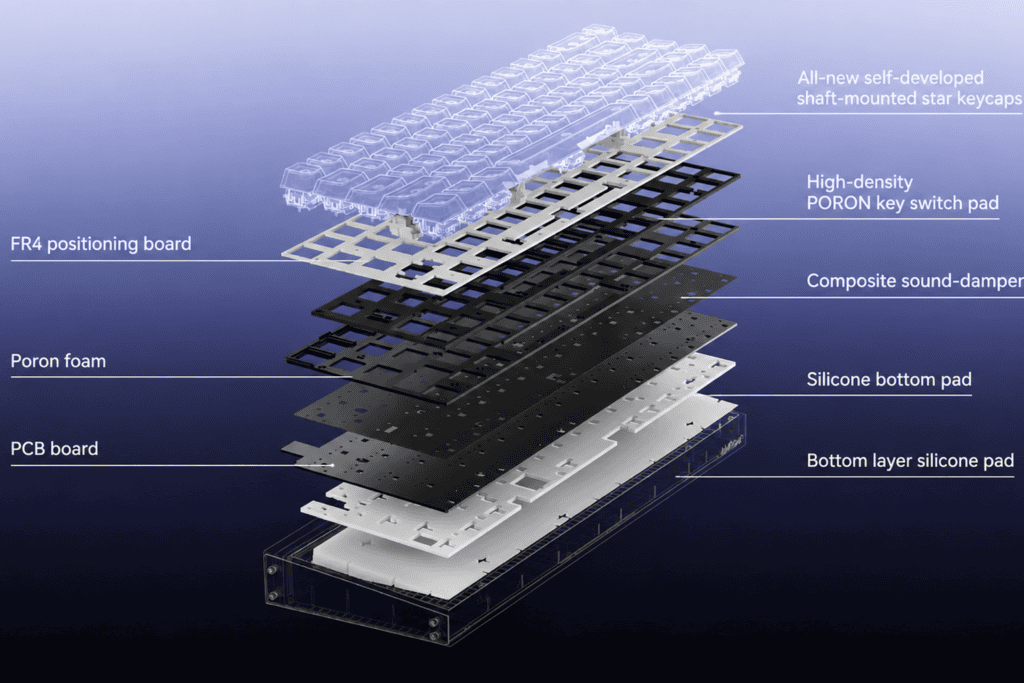
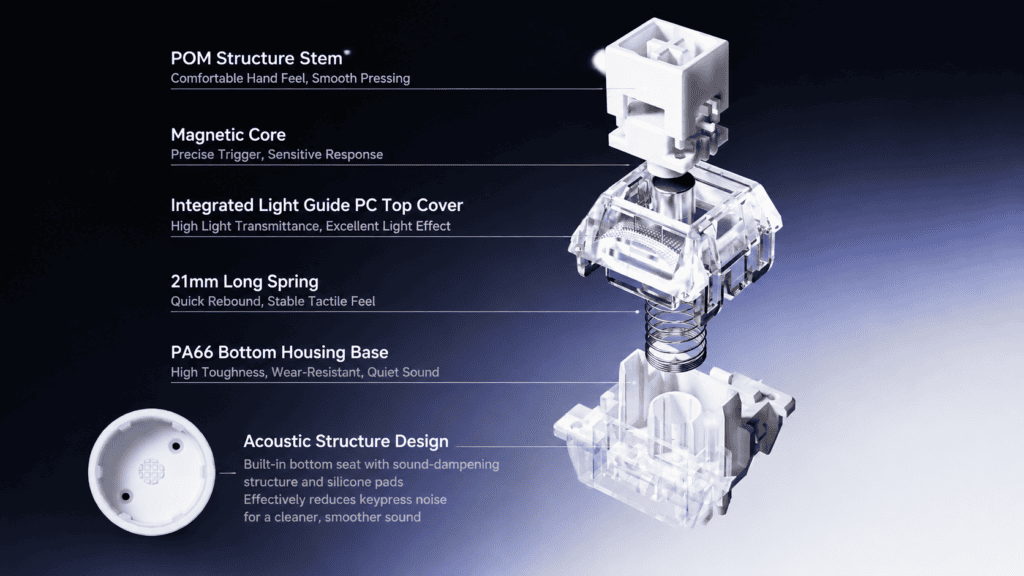
- Five-Layer Sound Dampening: Filters out minor rattle and vibration, condensing each keystroke into a cleaner, purer sound signature.
- FR4 Positioning Plate: Delivers elastic, springy rebound — refined through countless structural iterations to reach custom-keyboard standards.
- Gasket Mount: Pairs with the foam layers for a balanced, soft-yet-responsive typing feel.
Real-World Sound & Feel Feedback
Community reviews describe the acoustics as “crisp and pleasant” with a rebound that’s “snappy, never hollow or mushy.” A Vietnamese review nailed the nuance: “Compact, crisp clacky sound” that feels “solid thanks to the dampening.”
One honest note: some reviewers detected a slight grittiness during light glide-typing, meaning the factory lubrication isn’t flawless. It’s a minor quibble, but worth an honest mention.
The TTC King of Magnetism Purple Heart Switches
These linear magnetic switches offer smooth, bump-free actuation. Combined with the FR4 plate’s elasticity, the overall feel lands squarely in the “clean and decisive, but never harsh” zone. As one user put it: “The switches feel superb — typing triggers are incredibly responsive.”
Build Quality: The Logic of a Plastic Chassis
Here’s where MelGeek made a deliberate value trade-off — and understanding it is key to deciding if this board is right for you.
Material Breakdown
- Housing: ABS + PC hybrid (not full metal)
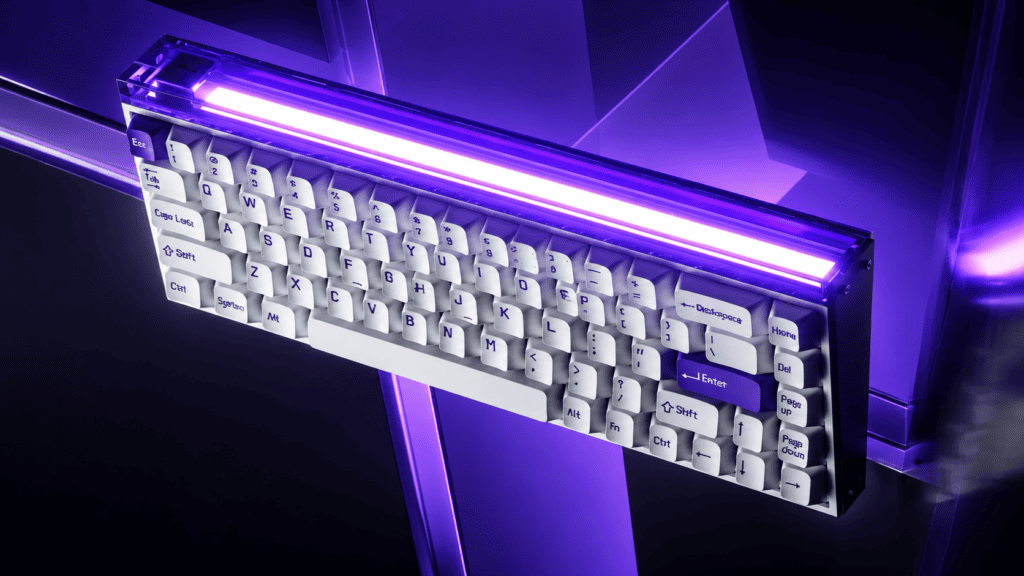
- Removable metal side panels + RGB acrylic light bar — supports DIY mods
- Dimensions: ~319 × 117 × 40mm
- Weight: ~850g
The Trade-Off of a “Plastic Shell”
This is the single biggest difference between the PRO+ and the flagship Ultra+: the PRO+ uses a plastic chassis, while the Ultra+ is aluminum.
- The cost: Some users find it “feels a bit light.” If you’re used to hefty full-aluminum boards, expect an adjustment period.
- The benefit: A lower entry price and easier portability. As one reviewer confirmed, “It’s more than enough for daily desk use.”
The critical fact: The PRO+ and Ultra+ are performance-identical — same 8K polling, 0.01mm Rapid Trigger, 16K scan rate. The only difference is material and heft. You can explore the full spec breakdown on the official MADE68 PRO+ product page.
The Imperfections Worth Knowing
No honest review is complete without the caveats. Here’s what to keep in mind before buying:
- Wired only: USB-C connection with no wireless mode — a consideration if you value a clean desk.
- Chassis feel: The ABS shell doesn’t match aluminum for tactile or visual premium-ness.
- Occasional QC feedback: A few overseas users reported RT configs occasionally not applying and default-setting double-clicks. These appear to be isolated cases, but check the return policy first.
- 68-key layout: Retains arrow keys but drops the dedicated F-row, requiring Fn combinations.
Final Verdict: Pro-Approved, But Match It to Your Needs
The value proposition is crystal clear: you get flagship Ultra+ competitive performance in a lower-cost plastic body — 8K polling, 0.125ms latency, 0.01mm Rapid Trigger, and the complete SOCD/DKS/END feature matrix.
Who It’s Perfect For
- Hardcore FPS players chasing peak precision (especially VALORANT / CS2)
- Budget-conscious upgraders who want genuine “pro-level specs”
- Tinkerers who love browser-based tuning and fine-tuning parameters
Who Should Look Elsewhere
- Full-aluminum enthusiasts who prioritize heft and premium feel (go for the Ultra+)
- Wireless or travel-focused users
- Office/programming users who lean heavily on the F-row
In one sentence: Zekken and Cortezia chose the MADE68 PRO+ because it makes zero compromises where performance matters. If all you care about is aiming sharper and stopping cleaner, the MelGeek MADE68 PRO+ Hall Effect gaming keyboard answers with a resounding yes.
 English
  German
  Portuguese
  Spanish
  Italian
  Finnish
  French
  Japanese
  Korean
  Swedish